March 16th, 2026
james_davis_nicoll: (Default)


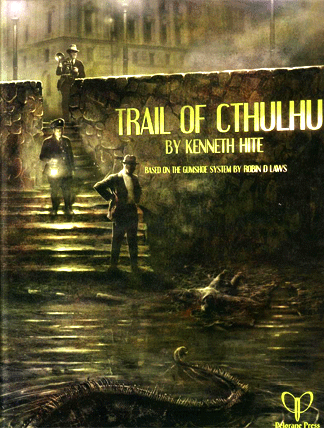
A monstrously large horde of rulebooks, supplements, and sourcebooks for Trail of Cthulhu, the tabletop roleplaying game of eldritch Cthulhu Mythos investigations using the GUMSHOE System from Pelgrane Press.

Bundle of Holding: Trail of Cthulhu MEGA
puddleshark: (Default)
posted by [personal profile] puddleshark at 02:06pm on 16/03/2026 under ,
Path to Weston Farm

Cold and grey and windy. On the high ground down by the coast, very cold and grey and windy. But the Skylarks were singing their little hearts out, their song louder even than the wind. C. told me of a new footpath opened by the National Trust, heading down from Weston Farm in Worth Matravers to join the Coast Path, so I went for an explore...

Skylark Alley )
james_davis_nicoll: (Default)
posted by [personal profile] james_davis_nicoll at 09:18am on 16/03/2026 under


Five benefits to a thermonuclear war.

Smile, Smile, Smile
Based entirey on my probably-inaccurate and decidedly non-expert recollection (I will definitely have some things in the wrong order):
 
USA: We're not so sure about this NATO thing. Maybe we'd honour Article 5; we'd have to think about it. You should be spending a lot more on defence. Oh and by the way, we're going to publicly undermine your governments, meet with your far-right parties, and some of our rich people with governmental ties will be funding them.
 
*time passes*
 
USA: Our new Security Strategy says that Europe is on its own, and if you care about Ukraine it's up to you to deal with it. Also, we plan to invade part of Denmark.
 
*time passes*
 
USA: Uh, when we said you should spend more on defence, we meant with American companies! Why are you buying arms elsewhere? How did this happen? That's really disrespectful. By the way, your troops basically didn't do any fighting in Afghanistan. You've never helped us. Why are you sending military personnel to Greenland?
 
*time passes*
 
USA: We want to bomb Iran! Can we use your airbases?
Europe: Why do you want to bomb Iran?
USA: We don't know! Can we use your airbases?
Europe: No.
USA: Betrayal! By an ally! What about the Special Relationship?

*Iranian missile hits a British airbase in Cyprus*

UK: OK, we'll let you use our airbases for anti-missile-launcher operations. Also, we're sending an area air defense ship to Cyprus.
USA: Too late, loser, we're not interested in you joining a war to claim the credit when we already won it. 

*a short time passes*

USA: Europe, we need you to send ships to protect the Strait of Hormuz, in this war that we already won.
Europe: No. 
UK: Didn't you just say you didn't want us?
USA: *threatens to pull out of NATO*

conuly: (Default)
posted by [personal profile] conuly at 06:51am on 17/03/2026
And isn’t everything risk?

The beloved lives
Then dies,
Then (if we’re lucky)
Rises again
Into a poem or song

Or into the world
In some other form
Impossible to predict.

Simplest story, oldest tale:

Sparrows sing it
From every hedge;

And swallows, also,
From their nests on the ledge.


**********


Link

Posted by Bruce Schneier

I’m skeptical about—and not qualified to review—this new result in factorization with a quantum computer, but if it’s true it’s a theoretical improvement in the speed of factoring large numbers with a quantum computer.

posted by [syndicated profile] apod_feed at 05:55am on 16/03/2026

Want to visit a planet that has 3.14 days in a year? Want to visit a planet that has 3.14 days in a year?


Posted by Azhar Khuwaja

Guest Post: Network automation promises speed, accuracy, and efficiency, but a full-scale rollout can be risky in a brownfield environment. This post examines the tradeoffs, tool choices, and why a gradual, bottleneck-driven approach is often the most effective way to begin.
posted by [syndicated profile] eaglespath_feed at 09:23pm on 15/03/2026

Review: The Martian Contingency, by Mary Robinette Kowal

Series: Lady Astronaut #4
Publisher: Tor
Copyright: 2025
ISBN: 1-250-23703-3
Format: Kindle
Pages: 390

The Martian Contingency is the fourth book of the mostly-realistic science fiction alternate history series that began with the novelette "The Lady Astronaut of Mars" and the novel The Calculating Stars. It returns to Elma York as the main character, covering her second trip to Mars after the events of The Fated Sky. It's helpful to remember the events of the previous two books to follow some of the plot.

Elma is back on Mars, this time as second in command. The immediate goal of the second Mars mission is to open more domes and land additional crew currently in orbit, creating the first permanent human settlement on Mars. The long-term goal is to set up Mars as a refuge in case the greenhouse effect caused by the meteor strike in The Calculating Stars continues to spiral out of control. Elma is anxious and not looking forward to being partly in charge, particularly since her position is partly due to her fame with the public (and connection with the American president). She'd rather just be a pilot. But she'll do what the mission needs from her, and at least this time her husband is with her on Mars.

As one might expect from earlier installments of this series, The Martian Contingency starts with the details and rhythms of life in a dangerous, highly technical, and mission-driven scientific environment: hard science fiction of the type most closely modeled on NASA and real space missions. Given that this is aimed at permanent Mars colonies that would theoretically have to be independent of Earth, it requires a huge amount of suspension of disbelief for the premise, but Kowal at least tries for verisimilitude in the small details. I am not an expert in early space program technology (Kowal's alternate history diverges into a greatly accelerated space program in the 1950s and, for example, uses female mathematicians for most calculations), so I don't know how successful this is, but it feels crunchy and believable.

As with the previous books, though, this is not just a day in the life of an astronaut. There's something wrong, something that happened during the first Mars expedition while Elma was in orbit and left odd physical clues, and no one is willing to talk about it. Elma is just starting to poke around before the politics at home go off the rails (again), exacerbated by a cringe-worthy social error by Elma herself, and she once again has to navigate egregious sexism and political meddling in a highly dangerous environment a long way from home.

It is a little surprising that I like this series as much as I do. I don't particularly care for pseudo-realistic science fiction, although I admit there is something deeply satisfying about reading about people following checklists properly. The idea of permanent Mars colonies as an escape from a doomed Earth is unbelievable and deeply silly, but Kowal locked herself into that alternate future with "The Lady Astronaut of Mars," which is still set in the future of all of the books so far. A primary conflict in each of the books comes from the egregious sexism and racism of a culture based on 1950s American attitudes towards both, and the amount of progress Elma can make against either is limited, contingent, and constantly compromised.

And yet. At its best, this series is excellent competence porn, both in the spirit of the Apollo 13 movie and for the navigation of social and political obstacles and idiocy. Elma is highly competent in a believable and sympathetic way, with strengths, weaknesses, and an ongoing struggle with anxiety. There is something rewarding in watching people solve problems and eventually triumph by being professional, careful, principled, and creative. It's enough to make a good book, even if I am not that interested in the setting and technology.

As with the rest of the series, this will not be for everyone. You have to be up for reading about a lot of truly awful sexism and racism without the payoff of a complete triumph. This is a system that Elma navigates, not overthrows, and that's not going to be enough for some readers. You also have to accept the premise of a Mars colony, which in an otherwise hard science fiction novel is a bit much despite Kowal's attempts to acknowledge some of the difficulties. But if you don't mind that drawbacks, this series continues to be an opportunity to read about people being quietly and professionally competent.

This is not my favorite entry, mostly because Elma makes a rather humiliating mistake that's central to the plot and has a lot of after-effects (and therefore a lot of time in the spotlight), and because there is rather a lot of discussion of sexuality that felt childish to me. The intent was to try to capture the way people in the 1950s talked about sex, and perhaps Kowal was successful in that, but I didn't enjoy the experience. But I still found myself pulled into the plot and happily rooting for the characters, even though a reader of "The Lady Astronaut of Mars" has a pretty good idea of how everything will turn out.

If you liked the series so far, recommended, although I doubt it will be the favorite entry for most readers. If you did not like the earlier books of the series, this one will not change your mind.

Content notes: Way, way too much detailed discussion of an injury to a fingernail than I wanted to read, as well as some other rather explicit description of physical injury. Reproductive health care through the lens of the 1950s, so, uh, yeah. A whole lot of sexism, racism, and other forms of discrimination that is mostly worked around rather than confronted.

Rating: 7 out of 10

conuly: (Default)
posted by [personal profile] conuly at 12:04am on 16/03/2026
conuly: (Default)
posted by [personal profile] conuly at 10:07pm on 15/03/2026
that the Roman calendar was batshit.

Today is the Ides, okay, and yesterday was pridie Ides, so far so good, and the day before that was three days before the Ides, because the Romans a. counted backwards and b. did this weird inclusive counting, so Friday, Saturday, Ides = three days.

(Which is also how Good Friday is three days before the Resurrection, when it blatantly isn't.)

***************************


Read more... )
james_davis_nicoll: (Default)
posted by [personal profile] james_davis_nicoll at 11:53pm on 15/03/2026
twistedchick: watercolor painting of coffee cup on wood table (Default)
Hi!

I have a character in a sci-fi universe who ends up "shipwrecked" alone on a completely uninhabited planet for two years. The planet, and the specific environment he lands in, are perfectly habitable by humans (we are in soft scifi territory here, very Star Trek inspired) and he's able to survive with some effort. (The details of how are not really important to the story - I know at least that he's the kind of guy who'd be able to salvage some tech and emergency supplies from his wrecked ship, and I'm comfortable with brushing past the details of what exactly he brought with him - but if anyone's really interested in coming at it from that logistical angle, I won't stop you!)

What is more relevant to the story is how this experience would continue to affect him by the time he's back home safely. I think there are a bunch of possible avenues here and I'd love to see people's takes on how they would approach this or approach researching it. For example, here are some of my cursory thoughts:
  • PTSD is certainly a likely long-term complication
  • It's implied that his shipwrecking was not an accident/was engineered maliciously - I imagine this is something he has dwelt on heavily throughout the two years and will affect his ability to trust people (and to visit other uninhabited planets in the future!). Seems like it would be easy to get caught in delusional spirals in a situation like that.
  • I know that prolonged isolation can cause hallucination/psychosis in some cases, especially in solitary confinement, sensory deprivation contexts, etc. Is that as much of a risk in this case? And if so, do you think he'd still be experiencing psychotic symptoms after the fact?
  • One of his personality traits is that he's fairly attention-seeking - I think it's likely this incident will exacerbate that and make him more desperate for connection
  • It'll probably alter how he approaches social situations in the future in general; that's something I'll definitely be thinking about
  • Perhaps he got into the habit of talking to himself on the planet, and this never went away
March 15th, 2026
james_davis_nicoll: (Default)
posted by [personal profile] james_davis_nicoll at 10:31pm on 15/03/2026
Finally.

Interestingly, although he died a couple of days ago, I couldn't find a news article to which I felt comfortable linking.

March 14th, 2026
conuly: (Default)
posted by [personal profile] conuly at 03:59am on 14/03/2026
Not to worry, I'll return it. We have plenty enough as it is.

************************


Read more... )

September

SunMonTueWedThuFriSat
  1
 
2
 
3
 
4
 
5
 
6
 
7
 
8
 
9
 
10
 
11
 
12
 
13
 
14
 
15
 
16
 
17
 
18
 
19
 
20
 
21 22
 
23
 
24
 
25
 
26
 
27
 
28
 
29
 
30