Reload page in style: light
Network.
![[personal profile]](https://www.dreamwidth.org/img/silk/identity/user.png) thistleingrey at 03:57pm on 20/03/2026 under reflectionsovay at 06:14pm on 20/03/2026
thistleingrey at 03:57pm on 20/03/2026 under reflectionsovay at 06:14pm on 20/03/2026
![[syndicated profile]](https://www.dreamwidth.org/img/silk/identity/feed.png) acoup_feed at 09:37pm on 20/03/2026
acoup_feed at 09:37pm on 20/03/2026Hey folks! I was traveling this week to give an invited talk at Western Michigan University, so I don’t have a blog post ready for you. That’ll also probably be the case for next week (where I will be at the annual meeting of the Society for Military History), though at least there I will have an abstract to let you see.
Now I am always reticent to post up the text of talks that are intended to be delivered live, because the genres are different, they rely on different kinds of delivery and they often aren’t footnoted and such for written publication. But in this case, I can do something a bit different, because the main parts of my talk for Western Michigan University were based around things that I’ve written (and in one case, something someone else has written) which you can read. So this is a chance to plumb the archives, in a sense and in so doing, basically ‘read along’ a version of the talk I gave which is rather ‘meatier’ than what I could have said in the 45-or-so minutes I had to speak.
The core of my talk was the concept of ‘historical verisimilitude‘ that I’ve riffed on here: the use of the appearance of historical accuracy, or a claim to historical accuracy in the absence of the real thing to market or promote something, be that something a film or show or game or what I have begun terming a ‘history influencer’ who makes history-themed social media content.
My initial example of this at work was the disconnect in Assassin’s Creed:Valhalla between the emphasis on visual accuracy and the catastrophic fumbling of other forms of historical accuracy, which you can read about in my “Assassin’s Creed: Valhalla and the Unfortunate Implications.” I then expanded on this example with a broader one from 2000’s film Gladiator and its initial battle scene, arguing that once again what was prioritized was visual accuracy because that gave the viewers the – incorrect! – assumption that ‘the research had been done’ on the rest, which you can read about in our series on “Nitpicking Gladiator‘s Iconic Opening Battle.”
I then jumped to example of this as a rhetorical strategy deployed by marketing, grounded in a critique of how George R. R. Martin (and the marketing team for Game of Thrones) has framed historical accuracy, using the Dothraki as an example of how this can go badly wrong and perpetuate quite nasty stereotypes about real peoples through the supposedly ‘realistic’ (in fact, deeply flawed) depiction of a fantasy stand-in for those people. You can read about that in our series on the Dothraki, “That Dothraki Horde.”
From there I transition into talking about this strategy used by the aforementioned ‘history influencers,’ with a contrast between how differences in platforms between YouTube and Twitter produced very different environments: where YouTube’s long-form video nature pushed a lot of content creators towards more carefully researched historical content which was often actually quite valuable (I particularly focused, and again this was very brief, on arms-and-armor and historical dress channels), Twitter’s emphasis on ultra-short micro-blogging produced a very different environment.
For the part focused on Twitter, I leaned quite heavily on T. Trezevant’s “The Antiquity to Alt-Right Pipeline” published in Working Classicists in 2024, which I think is one of the most revealing investigations of this particular space and the incentives that the post-Musk Twitter algorithm, which appears to openly and quite strongly prefer frankly bigoted or xenophobic content, created. From my own observations, while some of the accounts that push this particular, generally badly historically misinformed, version of the ancient past emerged in the pre-Musk period of Twitter, Classics Twitter largely held its own until the algorithm was slanted against them, making it all but impossible for a lot of good Classics accounts to compete for eyeballs.
And then I closed with a plea for greater engagement by historians in these online spaces, albeit with a caution that picking your platform is important. The fact that historical verisimilitude, the pretense of historical accuracy or knowledge, is so frequently used as a marketing tool speaks to the public’s desire for an accurate knowledge of the past. Folks want to know what the past was really like, but of course regular folks often do not have the tools to tell what is reliable, rigorous and careful history vs. what is not. So as historians, we need to be more present in these kinds of spaces (though we ought to pick our platforms; there is little point ‘competing’ on Twitter if the deck is stacked against you) to help folks find the accurate historical knowledge they are seeking.
And that, in an abbreviated form (or an enlarged form if you read all of the links as you went!) was the talk! Very grateful for WMU for inviting me out to give it. Until next week!
schneier_no_tracking_feed at 09:06pm on 20/03/2026The population needs better conservation.
As usual, you can also use this squid post to talk about the security stories in the news that I haven’t covered.
nanila at 09:09pm on 20/03/2026 under friday five, meme, meme: friday five, metablogging, navel-gazing, the friday five![[community profile]](https://www.dreamwidth.org/img/silk/identity/community.png) awesomeers, because I'm one of the two people who puts up the daily “Just One Thing” posts. I find it easier to write a short comment about my day there than to write up a full post, especially during the work week.thefridayfive, and I like reading threeforthememories during its annual spate of activity.bruce_schneier_feed at 09:06pm on 20/03/2026
awesomeers, because I'm one of the two people who puts up the daily “Just One Thing” posts. I find it easier to write a short comment about my day there than to write up a full post, especially during the work week.thefridayfive, and I like reading threeforthememories during its annual spate of activity.bruce_schneier_feed at 09:06pm on 20/03/2026The population needs better conservation.
As usual, you can also use this squid post to talk about the security stories in the news that I haven’t covered.
calimac at 02:04pm on 20/03/2026jwz_blog_feed at 07:46pm on 20/03/2026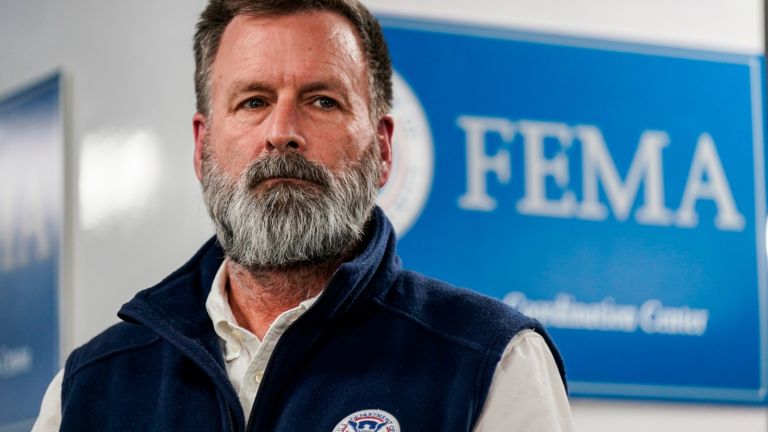
Phillips spoke "on multiple podcasts" about being teleported against his will, which he has described as "evil." As director of the Office of Response and Recovery, Phillips oversees billions in funds, and is deeply involved in rapid response efforts in the aftermath of disasters.
"Teleporting is no fun," Phillips said last year. "It's no fun because you don't really know what you're doing. You don't really understand it, it's scary, but yet so real. And you know it's happening but you can't do anything about it, and so you just go, you just go with the ride. And wow, what just an incredible adventure it all was."
Phillips in the same interview described "teleporting" to a Waffle House 50 miles away. "I was with my boys one time and I was telling them I was gonna go to Waffle House and get Waffle House," he said. "And I ended up at a Waffle House -- this was in Georgia and I end up at a Waffle House like 50 miles away from where I was."
Now, do not mistake Phillips description for something like a medical episode or a black out of some form. He insisted that he was traveling from location to location without experiencing the passage of time. When his friends asked him where he was, he replied that he was at the "'Waffle House in Rome, Georgia.' And they said, 'That's not possible, you just left here a moment ago.' But it was possible. It was real."
Phillips also claimed that he had once felt his car "lifted up" and teleported forty miles to a ditch near a church. [...]
At FEMA, Phillips, who lacks any sort of professional experience related to disaster response, has been successful in the sense that his lack of qualifications fall in line with the Trump administration's apparent goal of kneecaping the agency.
Previously, previously, previously, previously, previously, previously, previously, previously, previously, previously.
rachelmanija at 01:53pm on 20/03/2026 under author: van veen johanna, book review, genre: ghosts, genre: gothic, genre: horror
And the boidies around here in the past week have included the heron in the eco-pond being very up for a closeup, Mr de Mille, parakeets, and several magpie courting couples.
There have been a fair amount of flowers blooming in the spring, trala, for some weeks now, the daffs have been a particular feature, calling Mr Wordsworth, and today there was a massive show of narcissi along one edge of the playing field.
Among the less flamboyant flowers, the Wildflower Corner included grape hyacinths, and dandelions.
The trees along the street are busting out in leaves and blossom.
We also note that toxic nitrogen dioxide pollution in London has fallen to air quality standards in under ten years (rather than the projected nearly 200).
ysabetwordsmith at 01:03pm on 20/03/2026 under birdfeeding, gardening, illinois, nature, personal, wildlife busysovay at 11:58am on 20/03/2026maju at 12:43pm on 20/03/2026roads_org_uk_feed at 03:18pm on 20/03/2026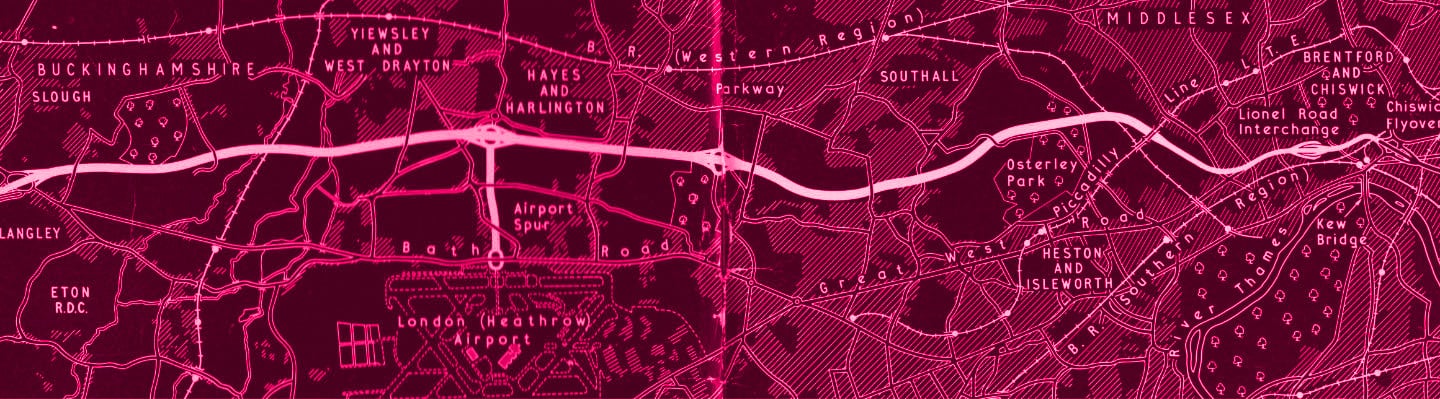
The second part of the story, where we learn why exactly the M4 gets narrower on the final approach to Europe’s biggest city.
lsanderson at 10:02am on 20/03/2026 I'm pleased to report that late next month I'll be the keynote speaker at the 2026 Southeastern Masonic Symposium in Asheville, North Carolina. While it's being hosted by Freemasons, this event is open to the public and will be livestreamed over the internet. The theme for the event is the important figures in esoteric Masonry, and my talk will be on Gerard Thibault d'Anvers, the brilliant 17th-century martial artist whose book Academie de l'Espee (translated by me as The Academy of the Sword) is the longest and most elaborate treatise on swordsmanship ever written, whose work is pervaded by Masonic and proto-Masonic symbolism, and whose legacy has intriguing connections with a British school of sacred geometry deeply enmeshed in the 18th-century Masonic scene.
  busy
busy| Sun | Mon | Tue | Wed | Thu | Fri | Sat |
|---|---|---|---|---|---|---|
|
1
|
2
|
3
|
4
|
5
|
6
|
|
|
7
|
8
|
9
|
10
|
11
|
12
|
13
|
|
14
|
15
|
16
|
17
|
18
|
19
|
20
|
| 21 |
22
|
23
|
24
|
25
|
26
|
27
|
|
28
|
29
|
30
|